
Iceland’s First Mosquitoes Signal Broader Challenge
Mosquitoes have been found in Iceland for the first time in recorded history, not in a greenhouse, as eggs on a cargo ship, or in standing water in a basement, but in a residential garden north of Reykjavik. The three Culiseta annulata mosquitoes were confirmed by Iceland's Natural History Institute last month and mark a significant milestone as Iceland was one of two mosquito-free places on Earth. Now only Antarctica remains.
This follows the same pattern we've seen with Aedes aegypti (Egyptian Mosquito) and Aedes albopictus (Asian Tiger mosquito) turning up in Kent and Surrey in the UK recently. As the northern hemisphere warms, our climate is becoming more hospitable to these vector-carrying insects. The trend is playing out across France, Spain, Italy, and now the Arctic Circle.
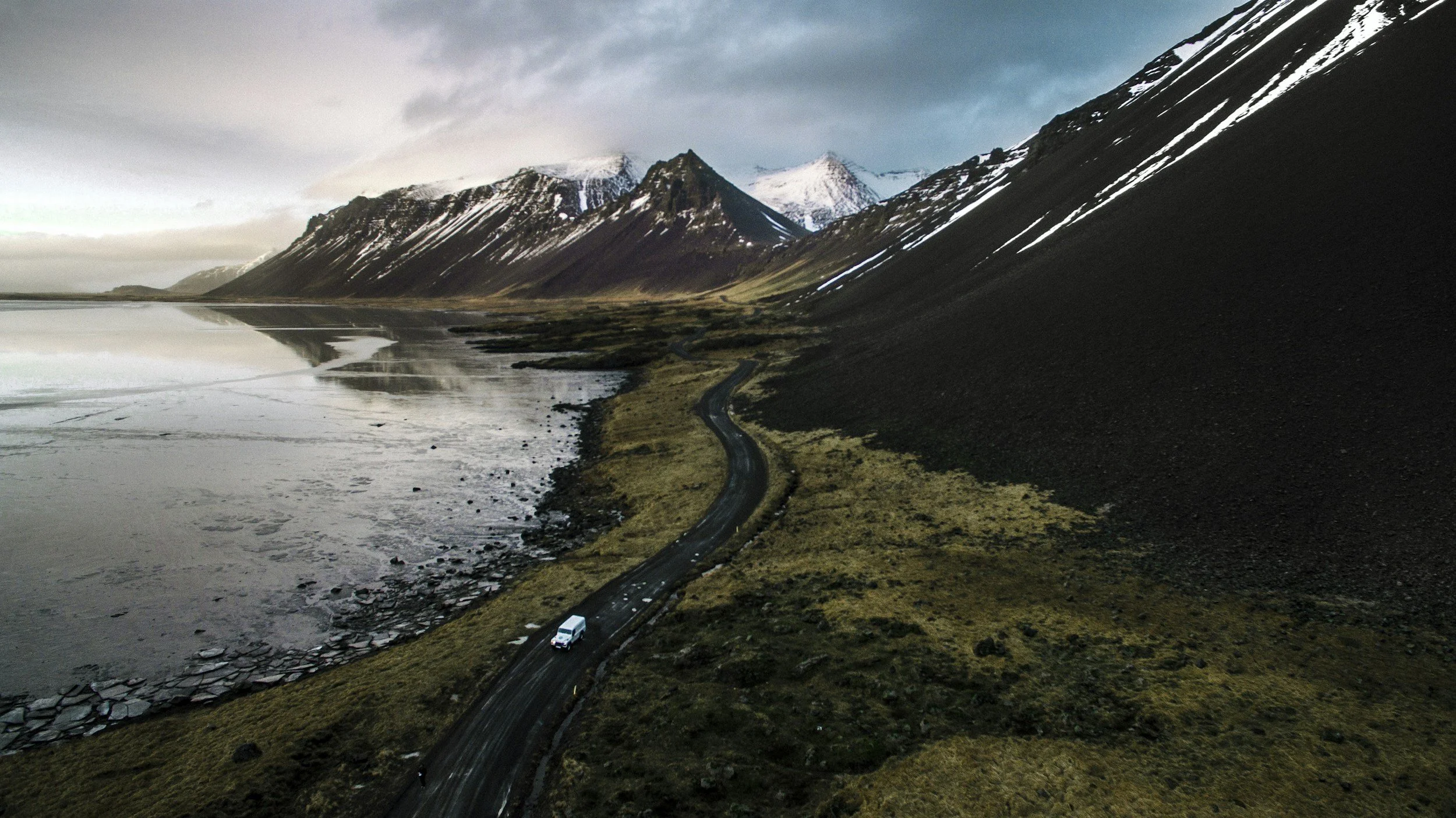
Iceland is warming at four times the rate of the rest of the northern hemisphere
Five forces are converging to accelerate mosquito spread and make control more difficult:
Warming temperatures are pushing viable habitats northward. Iceland is one of the fastest-warming regions on the planet.
Global trade is moving them in containers, tires, and cargo shipments, indeed an industrial port sits near where these mosquitoes were found.
Traditional chemical controls are being restricted as regulatory pressure against pyrethroids and organophosphates is mounting across the EU.
Insecticide resistance is accelerating. Mosquito populations now show multi-class resistance across Sub-Saharan Africa, Southeast Asia, and increasingly Southern Europe. Land use changes are proliferating breeding sites.
Urbanisation creates standing water in drainage systems, discarded containers, and rain barrels.
These factors are compounding into a serious challenge for modern mosquito control.
There is hope in new types of innovation emerging. Sterile insect technique, pheromone disruption, precision biocontrol—technologies that circumnavigate mosquitoes resistances to chemical sprays in a lot of places.
This is exactly why we’re hot on this area and our first investment will likely come in a solution that is a scalable, non-toxic alternative that works as biological threats expand into new geographies.
The question is whether we deploy these solutions before vector-borne disease becomes endemic in places that have never seen it before. Most climate funds haven't begun to look at this space, or worse, don't even know it's a problem, we’re looking to UpRoot it before it gets worse.
